

Bone Grafting
Bone Grafting To Support Your Jawbone
You need a healthy jawbone for a beautiful and functional smile. But when bone loss occurs, it can compromise your oral health and the appearance of your smile. With advanced bone grafting techniques, Dr. Slaughter can restore your lost bone tissue so you can achieve a healthy and beautiful smile.
How Bone Grafting Can Benefit Your Smile
- Support dental implant success with a stable foundation
- Enhance facial aesthetics by restoring lost bone volume
- Improve your ability to chew comfortably
Sustaining Your Jawbone Health
The health and integrity of your jaw can be affected in many ways, but the loss of one or more teeth is one of the most impactful ways. The stimulation that your teeth roots provide when you bite and chew is essential to receiving an ample supply of minerals and nutrients.
As a result, after losing a tooth root, this nutrient supply diminishes, which can lead to the gradual loss of your jawbone’s mass and density. For patients experiencing this, grafting is a way to fortify your smile’s foundation before replacing your lost teeth with dental implants.
Understanding Ridge Augmentation
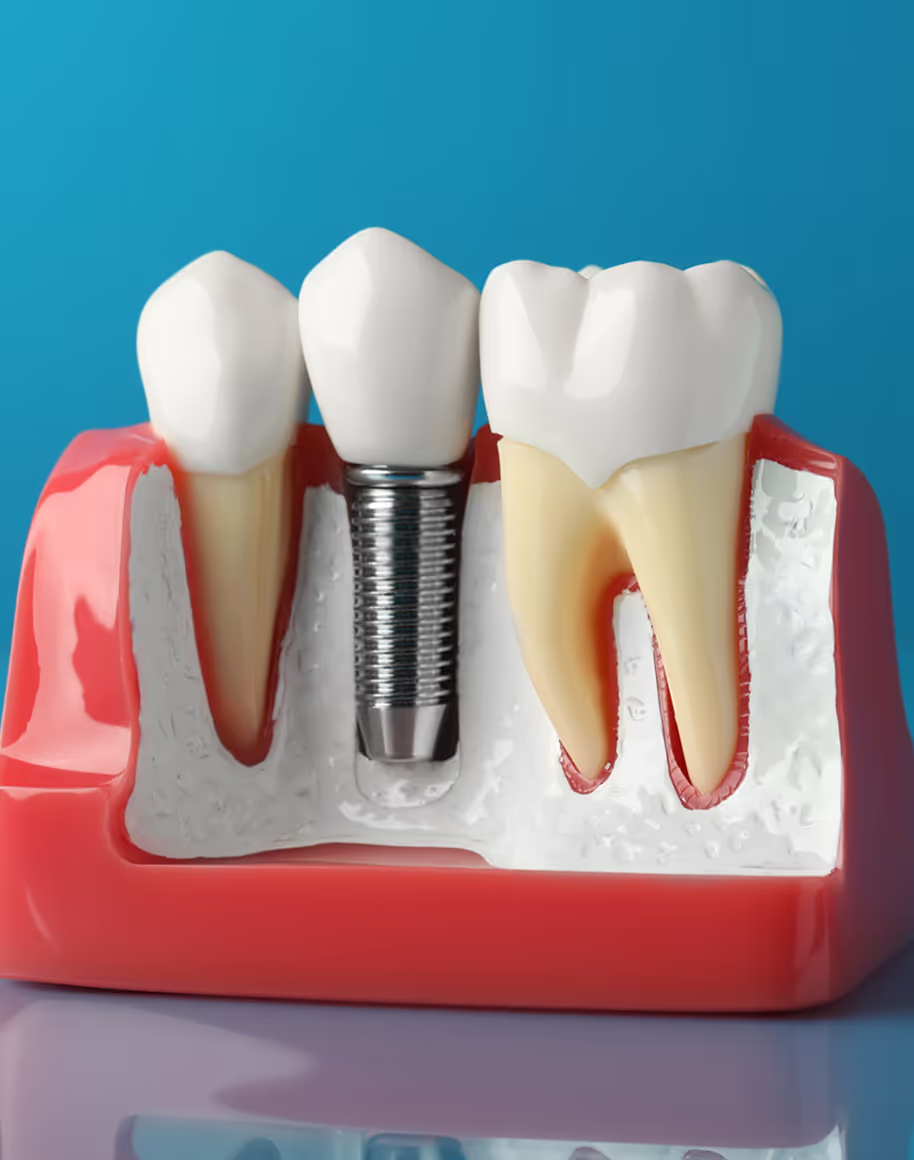
Ridge augmentation is when we place a biocompatible bone graft material into your empty socket (where your tooth root once was). This restores the height and contour of your dental ridge, as the bone surrounding the socket will bond to the graft material filling it.
While ridge augmentation is not always necessary, it can help support the success of your dental implant placement by offering a more substantial foundation for it to rest upon. For the best results, Dr. Slaughter usually suggests this procedure after performing a tooth extraction. However, he may also recommend it as a prerequisite procedure for patients who’ve already lost one or more teeth.
Understanding Sinus Augmentation
While ridge augmentation is a procedure we offer to help fortify your lower dental ridge after losing a tooth, if you’ve lost teeth on your upper ridge, then sinus ridge augmentation may be the better solution.
Given the limited space on your upper ridge and the presence of the sinus floor, the process of augmenting your upper dental ridge isn’t the same as fortifying your lower one. With sinus ridge augmentation, your chances of successful implant placement for your upper teeth can be much higher.